How Starlink Kept Iran Protests Alive During Blackout
When Iran Went Dark, How Starlink Kept Protests Alive
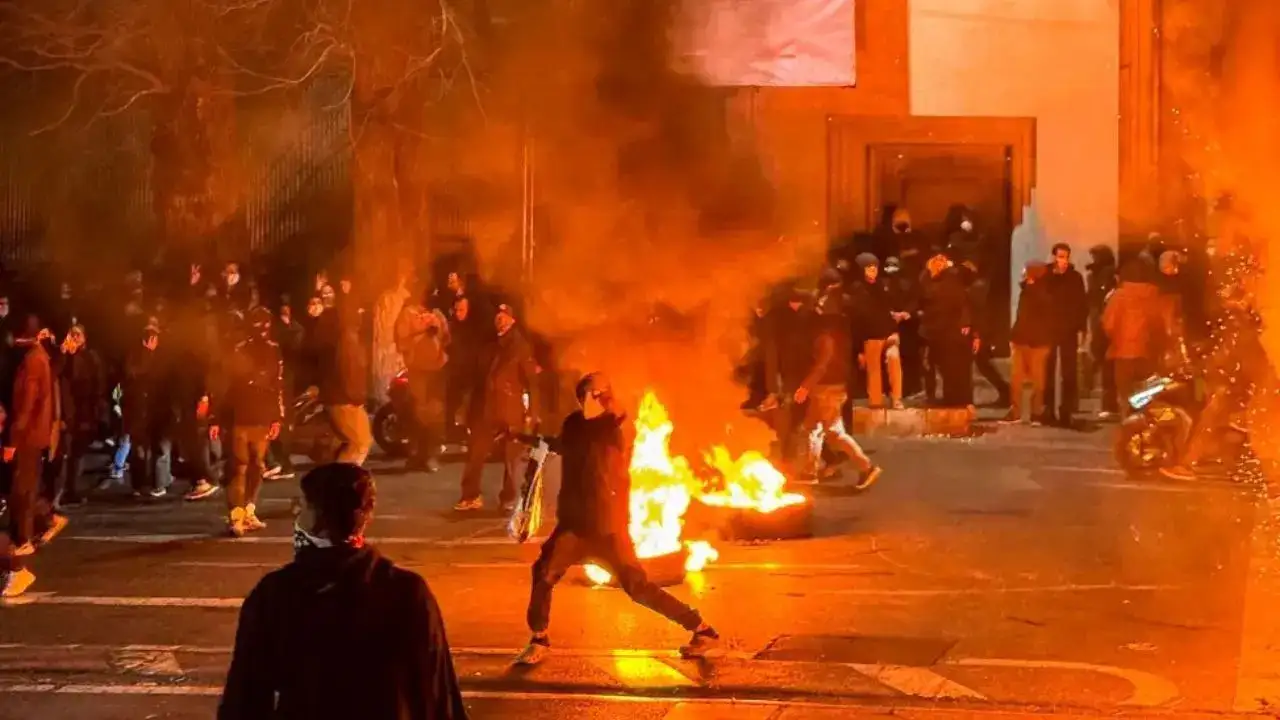
Among the responses were a new round of public unrest at the beginning of 2026 – one of the largest we have seen in years. Millions of Iranians protested on the streets due to economic hardship, political grievances, and calls for greater freedoms. As the protests expanded, the regime’s attempts to shape the narrative also grew. One of the most dramatic measures adopted by the Islamic Republic was to close down most of the country’s internet access, severing citizens from the rest of the world.
The Blackout: Official Motive and Impact

On 8 January 2026, Iran brought about a near-total blackout of the internet. The restrictions on mobile data and broadband internet access, as well as on domestic and international websites, were suddenly tightened or cut off entirely. The government defended the blackout as a necessary step to restore “security and order,” saying that protesters were using online platforms to coordinate unrest.
The blackout was more than just a interruption — it was a calculated move to cut off communication, stifle the flow of protest videos and images, and deter rival groups from organizing on the streets. With the majority of the citizenry cut off from modern means of communication, it was increasingly difficult to disseminate news, to contact family members overseas, or to focus international attention on events unfolding in the streets of Iran.
For ordinary Iranians, it meant that basic activities — using banking and ride-sharing apps, using messaging platforms — might be suddenly disrupted. Many migrated to state-controlled domestic networks or searched for sporadic voice calls, but the contrast was clear: Iran was almost totally been cut off.
Starlink: A Satellite Lifeline
During this cyber blackout, a surprising technology was embroiled in controversy and emerged as a critical necessity: Starlink — the satellite internet provider operated by Elon Musk’s SpaceX. Starlink is a low-Earth orbit satellite constellation that beams internet directly to user terminals on the ground. It doesn’t need local telecom infrastructure like cell towers or fiber-optic cables, and it works even when a government cuts off conventional networks.
Although Starlink is prohibited in Iran, thousands of terminals had long been smuggled into the country via underground networks. These gadgets, frequently owned privately or shared by a handful of people, became one of the very few remaining portals to the outside world after traditional internet service disintegrated.
It enabled the sharing of photos, videos, and eyewitness accounts with friends and media abroad.
It allowed coordination in areas where mobile data was crippled.
It kept independent news and messaging services alive when government censorship had silenced domestic platforms.
Starlink did not bring full connectivity back for most Iranians, but it provided some activists a means to capture and share scenes the regime was intent on concealing.
Government Countermeasures: Jamming and Risk
Aware of the danger of satellite internet, Iranian officials took rapid action to make it unusable. Tehran had been reported to have used military-grade jamming equipment to disrupt Starlink signals. Such jamming could reduce Starlink performance substantially, causing uploads and data transfers to become slow or unstable.
In addition to technical disruptions, Starlink hardware ownership was criminalized, to the point that it could be considered a national security crime. The legal peril introduced yet another degree of risk for anyone seeking to access satellite terminals in the midst of the turmoil.
It was, in short, a game of cat and mouse between activists doing their best to keep their networks running while avoiding detection, and officials employing surveillance and jamming to snuff out any communications that might invigorate the protests.
Starlink’s Role in the Global Spotlight
While its technical effects were blunted by jamming and limited availability — a tiny fraction of Iran’s 90 million people could get access — Starlink’s symbolic impact was large. It was a claim staked out along a fault line of the digital era: that connectivity itself was political.A global blackout provoked international outrage. Human rights groups and activists said disconnecting the internet was an effort to conceal evidence of the repression and mute the voices of those affected by it. Starlink connections were also the source of many videos of protests that made it out of the country.
Elon Musk and SpaceX reportedly responded to the blackout by taking measures to keep Starlink service available, including purported attempts to update software in order to minimize the effect of jammed signals. There were even claims that Starlink access in Iran was being provided for free during the crisis — a stark illustration of how the fortunes of technology companies can be tied to geopolitical conflicts.
The Bigger Picture: Internet Freedom vs. State Control
Iran’s Internet outage and the attempts to circumvent it using satellite services highlight a wider global trend. Governments facing internal dissent are increasingly viewing control over digital networks as key to retaining power. At the same time, protesters and human rights activists believe that open access to the Web is vital for transparency, organization, and holding the powerful accountable.
Starlink’s impact is not – or not just – a story of technology saving the day: it’s a story of infrastructure, politics, risk, and opposition. While Starlink did not completely break through the Iranian government’s blackout in this case, it sustained pockets of communication and ensured that images of the movement reached the rest of the world.
In an era in which digital connectivity can be toggled on and off like a light, satellite internet has become one of the few technologies able to transcend such limits — albeit not without pushback. And with Iran’s protests still evolving, the contest to control the flow of information is just as hotly contested as the demonstrations on the streets.