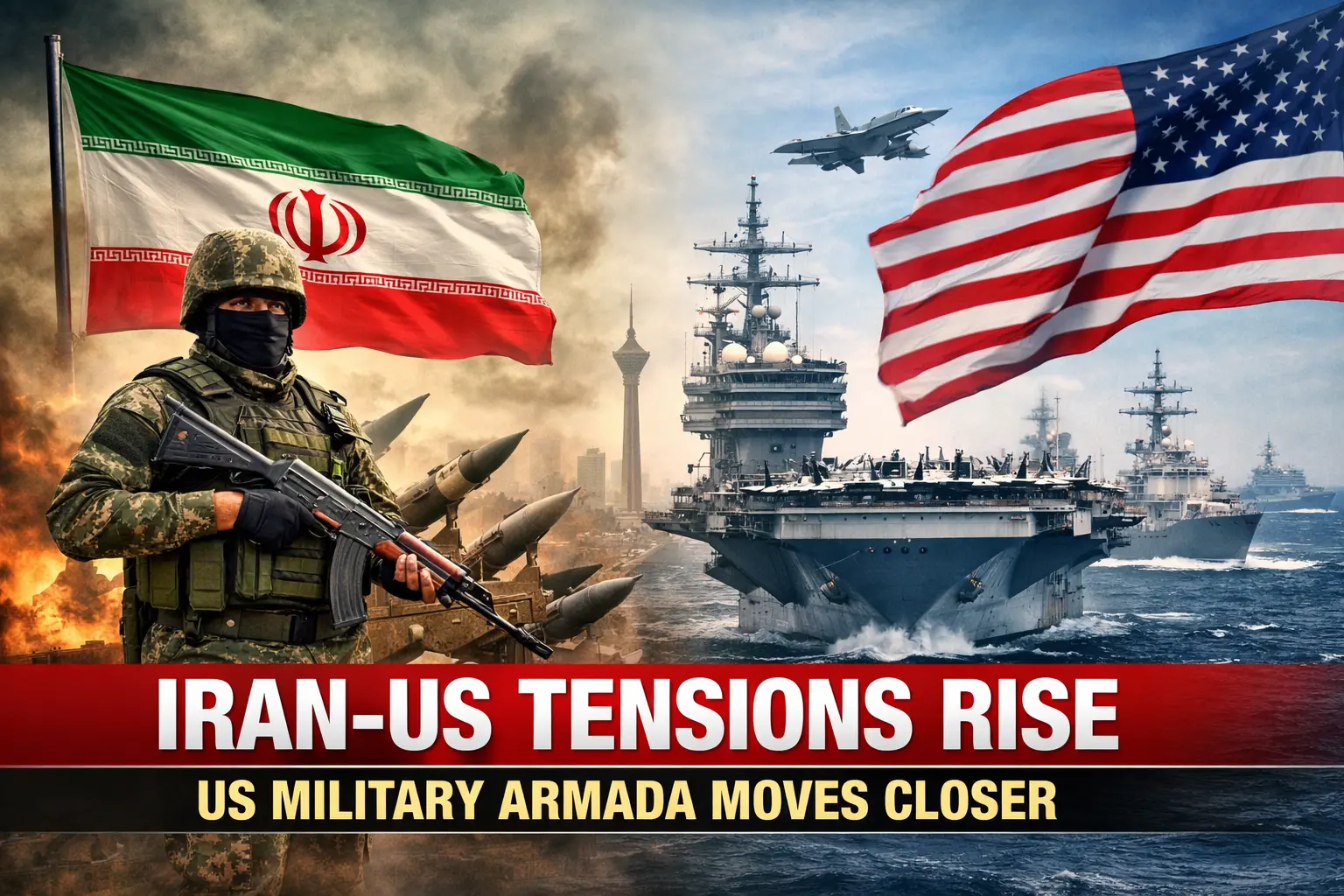
Iran US Military Tensions Rise as American Naval Armada Approaches the Region
Iran US military tensions have intensified in recent days as the United States continues to expand its military presence near the Middle East. Reports of a large US military armada moving closer to the region have drawn international attention, prompting Iran to increase its defense readiness while diplomatic efforts continue behind the scenes.
The situation has raised concerns about regional stability in the Middle East, with global leaders closely monitoring developments to prevent further escalation.
Growing US Military Presence Near Iran
The United States has increased its deployment across strategic waterways, including the Persian Gulf, the Arabian Sea, and the Red Sea. According to officials, the buildup includes US aircraft carrier deployment, guided-missile destroyers, and additional air assets as part of a broader security strategy.
Washington has emphasized that the US Navy deployment near Iran is defensive in nature and aimed at protecting international shipping routes and allied interests. However, the scale of the deployment has fueled speculation about rising Middle East military tensions.
Energy markets and regional governments are also watching closely, as these waters remain critical for global oil and gas transportation.
Iran Prepares for War Amid Rising Tensions

Iranian authorities have responded by stating that the country is fully prepared to defend its sovereignty. Senior officials have highlighted Iran defense readiness, noting that military forces are on alert in response to the growing US presence.
While Iran prepares for war only as a defensive precaution, its leadership has made clear that it does not seek conflict. Officials have repeatedly stressed that Iran will respond firmly to any external aggression but prefers diplomatic solutions over confrontation.
This stance reflects Iran’s broader response to the US military buildup near Iran, balancing deterrence with calls for dialogue.
Iran US Conflict News and Diplomatic Messaging
As Iran US conflict news dominates international headlines, both sides continue to engage in strategic messaging. The United States has reiterated that it remains open to negotiations, particularly on issues related to regional security and long-standing disputes.
At the same time, Iran has criticized what it describes as pressure-based diplomacy, arguing that military signaling undermines trust. Despite this, diplomatic efforts between Iran and the US remain active, supported by regional partners and international mediators.
Analysts note that this combination of military preparedness and diplomatic outreach has long defined relations between the two countries.
Regional and Global Impact
The escalation of Iran US military tensions has sparked concern across neighboring countries, many of which fear that a miscalculation could destabilize the region. Governments have called for restraint, emphasizing the importance of maintaining Persian Gulf security and protecting civilian shipping lanes.
Global markets have reacted cautiously, particularly in the energy sector. Any disruption linked to Middle East tensions between Iran and the US could have far-reaching economic consequences.
Strategic Calculations on Both Sides
Experts believe the current US military posture is intended as a deterrent rather than a signal of imminent conflict. Similarly, Iran’s public statements are viewed as strategic messaging aimed at discouraging military action while reassuring domestic audiences.
Historically, both nations have relied on measured escalation combined with dialogue to manage crises. Whether this approach will succeed amid the current Iran response to US naval deployment remains uncertain.
Calls for Restraint and What Lies Ahead
International organizations and global leaders have urged both sides to exercise restraint and prioritize diplomacy. Observers argue that sustained communication is essential to prevent a broader crisis and preserve regional stability in the Middle East.
As the situation continues to evolve, the focus remains on diplomacy, deterrence, and careful strategic decision-making. While the risk of conflict cannot be ruled out, many analysts believe that both Tehran and Washington recognize the high costs of escalation.
For now, the world watches closely as Iran US military tensions rise, hoping that dialogue will prevail over confrontation.