Trump Says He Hopes to Avoid Military Action Amid Rising Iran Tensions
Washington / Tehran: U.S. President Donald Trump said on Thursday that he hopes the United States will not have to resort to military action against Iran, even as tensions between the two nations remain high and U.S. military assets move closer to the region.
During remarks to reporters, Trump acknowledged an ongoing buildup of U.S. naval and air forces near Iranian waters but emphasized his preference for diplomacy over conflict. “We have a group headed out… and hopefully we won’t have to use it,” he said, referring to the deployed forces.
The comments came amid renewed disagreement over Iran’s nuclear program, regional influence, and recent crackdowns on antigovernment protests — all factors contributing to heightened Iran US military tensions.
U.S. Military Presence Near Iran

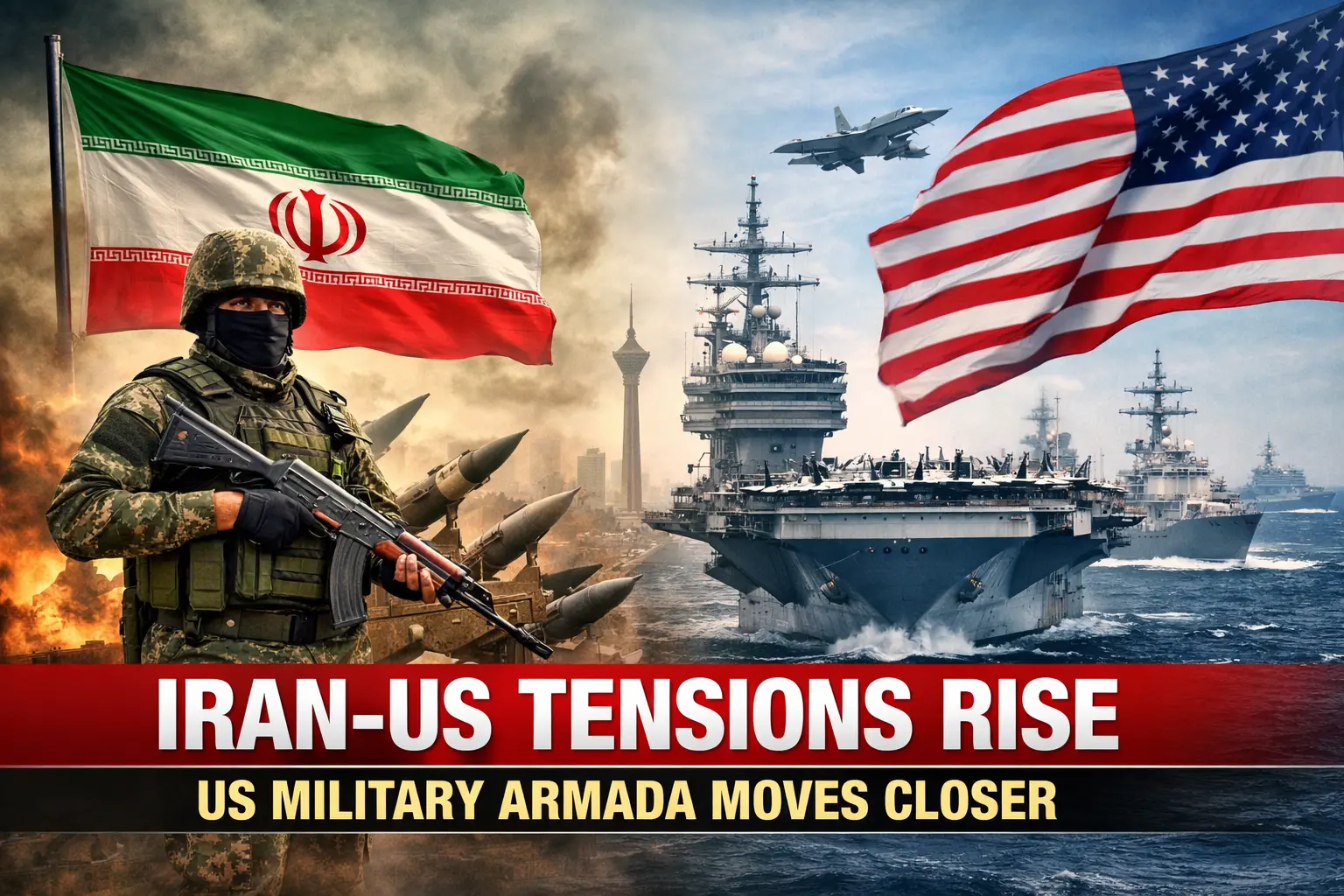
In recent weeks, the United States has significantly expanded its military footprint in and around the Middle East, particularly near the Persian Gulf and adjacent waterways. The deployment includes an aircraft carrier strike group, guided-missile destroyers, and support aircraft — a posture often described as a US military armada.
U.S. officials say the buildup is aimed at deterring aggression and ensuring the security of global shipping lanes, especially through the Strait of Hormuz, a vital waterway for international energy supplies. The presence also reflects ongoing concerns about Tehran’s nuclear ambitions and support for allied partners in the region.
Trump has framed the deployment not as a prelude to conflict but as a tool of pressure to bring Tehran back to negotiations over its nuclear program and regional activities.
Trump’s Call for Dialogue
Despite the military posture, Trump emphasized his commitment to exploring diplomatic options. He reiterated that he has been in communication with Iranian officials and expressed a desire to resolve differences without violence.
“I have had and I am planning on it,” Trump said when asked whether talks with Tehran were planned, noting his hope to reach an agreement peacefully.
Senior U.N. officials have echoed this call for negotiation. United Nations Secretary-General Antonio Guterres recently urged both sides to pursue nuclear talks “to avoid a crisis that could have devastating consequences in the region.”
Trump’s remarks mark a subtle shift from earlier threats of force, signaling a possible preference for engagement over escalation amid mounting international pressure.
Iran’s Reaction and Response
Iranian leaders have not been silent in the face of U.S. pressure. Tehran has consistently maintained that its military is on high alert and prepared to defend the country in the event of any aggression. Iranian officials have described potential U.S. action as a serious escalation and warned that any attack would be met with a strong response.
Iran has also criticized what it calls “pressure-based diplomacy,” arguing that threats of military action undermine trust and reduce the chances of meaningful negotiation. Nevertheless, Iranian authorities have said they remain open to talks, provided that discussions occur without coercion or ultimatums.
Tehran’s foreign ministry has stressed that Iran defense readiness is high amid the presence of U.S. forces in nearby waters, underscoring the seriousness with which it views the situation.
Diplomatic Efforts and Global Reactions
Amid the rising Middle East military tensions, several world leaders and regional powers have called for restraint and increased diplomatic engagement. Russia has publicly urged both the United States and Iran to return to the negotiating table and avoid any use of force that could destabilize the broader region.
European nations and Arab states have also voiced concern that a direct confrontation between Washington and Tehran could disrupt regional security, trade routes, and economic stability.
Despite the rhetoric, many analysts describe the current environment as a mix of strategic signaling and active diplomacy, where military readiness operates alongside ongoing efforts to find a negotiated solution.
Economic and Regional Implications
The escalation of Iran US conflict news has already impacted financial markets, particularly in sectors tied to global oil and gas production. The Middle East remains a cornerstone of international energy supplies, and even the threat of conflict can influence prices and investor sentiment.
Neighboring countries, including members of the Gulf Cooperation Council, have expressed concern that heightened confrontation could lead to broader instability, prompting calls for dialogue and peaceful resolution.
What Comes Next
As tensions persist, the situation remains dynamic and unpredictable. President Trump’s remarks that he hopes to avoid military action suggest a willingness to pursue diplomatic avenues, even as the U.S. maintains a robust defensive posture.
International observers note that both Washington and Tehran have incentives to avoid a direct conflict, given the potentially severe consequences for regional security and global economic stability.
For now, the world watches closely, balancing concern over Middle East military tensions with cautious optimism that negotiation and restraint might prevail over confrontation.
Key Takeaways
Trump says he hopes to avoid military action against Iran.
A large U.S. naval force remains deployed near the region.
Iran continues to assert its readiness to defend against any attack.
Diplomacy remains an active, albeit fragile, path forward.
Would you like an SEO title, meta description, and keyword set tailored for this article (AdSense + Google News ready)? Just let me know!