Middle East Crisis LIVE: US Strikes Iranian Military Site as Iran Says It Has Targeted American Base
Tensions in the Middle East escalated sharply after the United States carried out fresh military strikes against Iran, while Tehran claimed it had retaliated by targeting an American military base in the Gulf region.
According to U.S. officials, American forces struck an Iranian military facility near Bandar Abbas after multiple Iranian drones threatened commercial shipping routes and U.S. assets near the Strait of Hormuz.
Iran later announced that it had launched retaliatory missile and drone attacks against a U.S. base, raising fears of a wider regional conflict involving Gulf nations, Israel, and American allies.
US Conducts Fresh Strike on Iranian Military Site
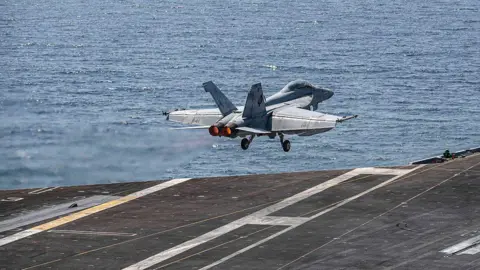
The Pentagon described the latest operation as a “defensive strike” aimed at protecting U.S. troops and international maritime traffic.
According to reports:
- U.S. forces destroyed a drone-control station in Bandar Abbas
- Four Iranian attack drones were intercepted and shot down
- The targeted site was allegedly preparing another drone launch near the Strait of Hormuz
American officials stated that the strikes were necessary after Iranian drones posed a threat to commercial vessels operating in one of the world’s most critical oil shipping lanes.
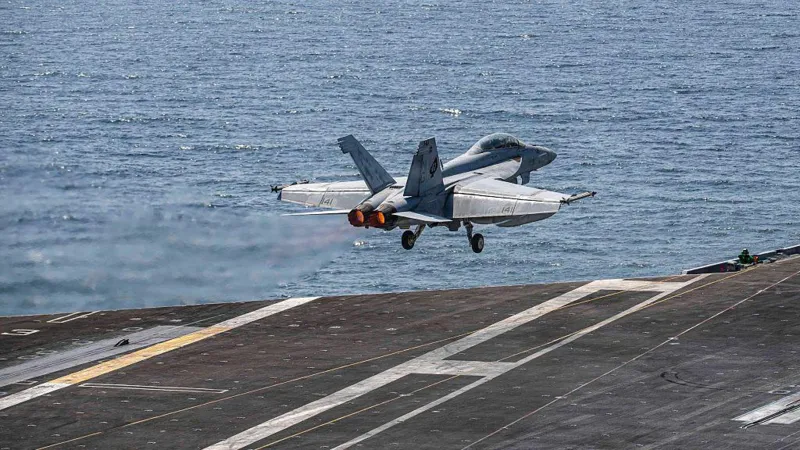
The operation reportedly involved advanced U.S. fighter aircraft, including F-35 and F/A-18 jets.
Iran Claims Retaliatory Strike on US Base
Following the U.S. attack, Iranian media claimed that Tehran targeted an American military installation in retaliation.
Iran’s Revolutionary Guard stated that:
“Aggression will not go unanswered.”
Reports indicated that missiles and drones were launched toward a U.S. base in Kuwait, though officials said air defense systems intercepted several threats before major damage occurred.
Kuwaiti authorities confirmed hostile aerial activity but did not immediately report casualties.
Iran also warned that further U.S. military action would trigger a “stronger and more decisive response.”
Donald Trump Warns Iran
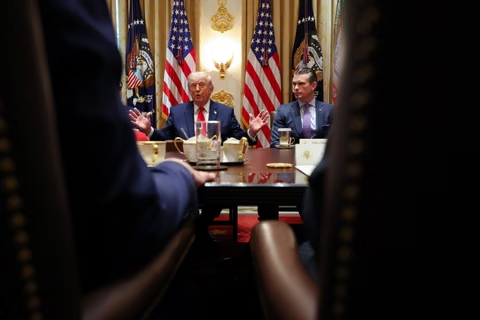
President Donald Trump reacted strongly to the latest developments, saying Iran was “negotiating on fumes” and warning that the United States could “finish the job” if peace talks collapse.
Trump emphasized that the Strait of Hormuz must remain open for global shipping and warned against any attempt by Iran to disrupt international trade routes.
The White House also rejected reports from Iranian media claiming that a finalized peace agreement had already been reached.
Officials called those reports:
“Complete fabrication.”
Strait of Hormuz Remains Critical Flashpoint
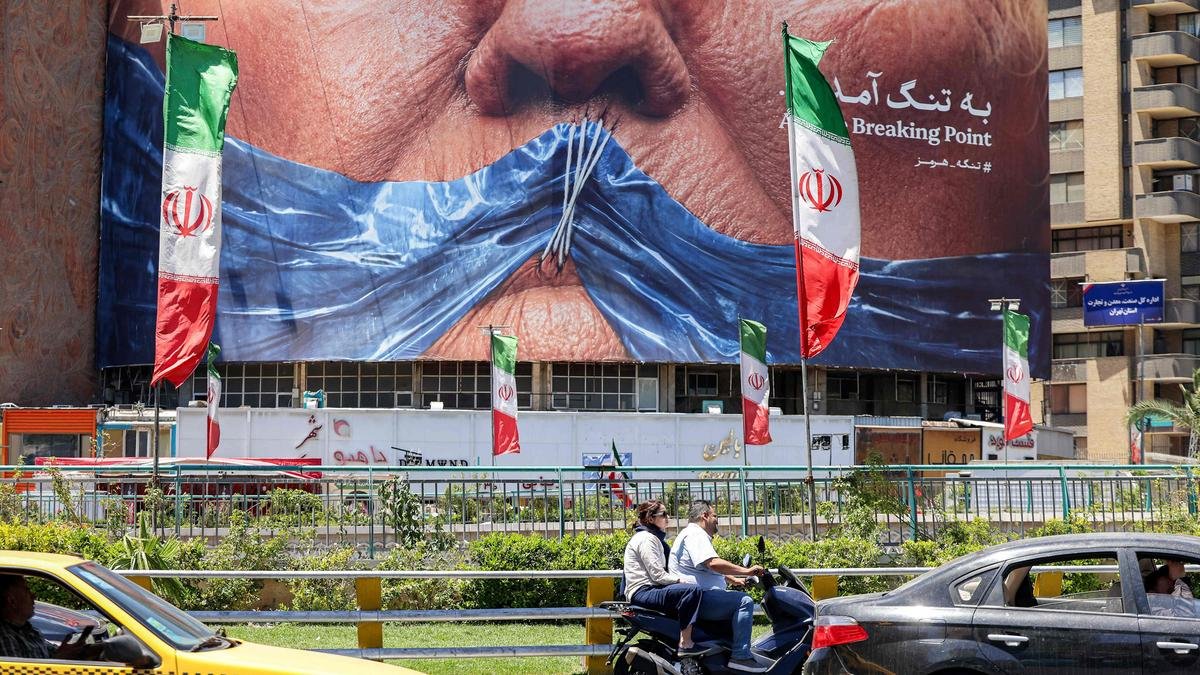
The Strait of Hormuz remains at the center of the crisis.
Nearly 20% of global oil shipments pass through the narrow waterway connecting the Persian Gulf to global markets.
Military activity near the strait has increased fears of:
- Oil supply disruptions
- Rising fuel prices
- Shipping delays
- Global economic instability
Shipping companies and Gulf nations have already increased security measures due to the rising threat of drone and missile attacks.
Global Oil Markets React
Oil prices climbed after news of the latest strikes emerged.
Analysts warned that prolonged conflict between the United States and Iran could:
- Push crude oil prices significantly higher
- Increase global inflation
- Impact airline and transport industries
- Create uncertainty in financial markets
Investors are closely watching developments around the Strait of Hormuz because even temporary disruptions could affect global energy supplies.
Diplomacy Continues Despite Escalation
Despite the renewed military clashes, diplomatic talks between Washington and Tehran are still ongoing through regional mediators.
Negotiations reportedly focus on:
- Reopening shipping routes
- Nuclear restrictions
- Iranian sanctions relief
- Control of enriched uranium stockpiles
However, repeated exchanges of strikes are making peace efforts increasingly fragile.
Israel and Gulf Nations on High Alert
Israel and several Gulf countries have increased military readiness amid fears the conflict could spread further.
Security analysts warn that:
- Hezbollah could intensify attacks on Israel
- Additional Gulf states may become targets
- Regional proxy groups could join the conflict
Military experts believe the current situation remains one of the most dangerous phases of the ongoing Middle East crisis.
Conclusion
The latest exchange of strikes between the United States and Iran has pushed Middle East tensions to a critical level.
With the U.S. targeting Iranian military infrastructure and Tehran claiming retaliation against an American base, fears of broader regional conflict continue to grow.
As diplomatic negotiations continue alongside military escalation, the world is closely monitoring whether peace efforts can prevent a larger war in the Gulf region.