Oil Prices Fall After Trump Signals Final Decision on Iran Deal
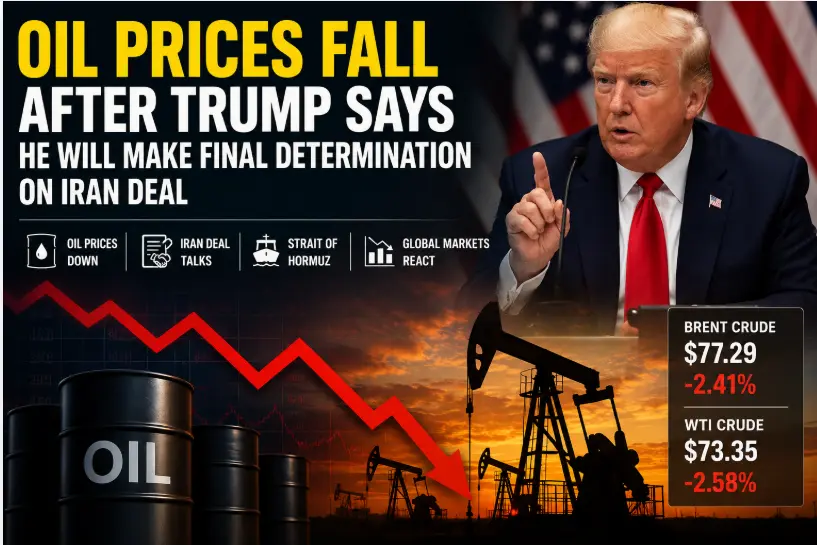
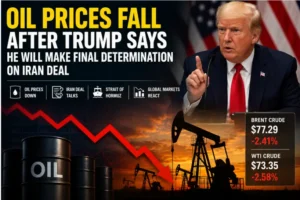
Oil Prices Fall After Trump Says He Will Make Final Determination on Iran Deal
Global oil prices moved lower after U.S. President Donald Trump announced that he would make a final determination on a proposed Iran deal during a high-level White House meeting. The statement increased investor optimism that diplomatic progress could help reduce tensions in the Middle East and potentially restore stability to global energy markets.
The decline in oil prices reflects growing expectations that ongoing US-Iran negotiations may lead to a broader agreement involving security arrangements, nuclear restrictions, and the reopening of critical shipping routes in the region. As markets reacted to the latest developments, traders closely monitored signals from Washington and Tehran regarding the future of the proposed deal.
At The Apna Times, we are tracking the latest developments surrounding the Trump Iran deal and its impact on global markets, international trade, and regional security.
Oil Prices Drop as Markets React to Iran Deal Optimism
Oil markets responded quickly after Trump’s announcement regarding a final decision on the proposed agreement with Iran.
Brent crude and U.S. West Texas Intermediate (WTI) crude futures both declined as investors anticipated the possibility of easing geopolitical tensions. Market participants believe that a successful agreement could reduce risks to global energy supplies and improve shipping conditions in the Persian Gulf.
Analysts noted that oil prices have been highly sensitive to developments involving Iran because of the country’s strategic role in global energy exports and its influence over key maritime routes.
Why the Iran Deal Matters for Oil Markets
The proposed Iran deal is closely linked to the future of the Strait of Hormuz, one of the most important energy transit routes in the world.
Nearly one-fifth of global oil and liquefied natural gas supplies pass through the Strait of Hormuz. Any disruption to shipping in the area can immediately affect international energy prices and supply chains.
For weeks, traders have worried that continued tensions linked to the Iran-Israel conflict could result in prolonged disruptions to oil exports. However, hopes for a diplomatic breakthrough have helped ease some of those concerns.
Trump’s Final Determination Could Shape Global Energy Markets
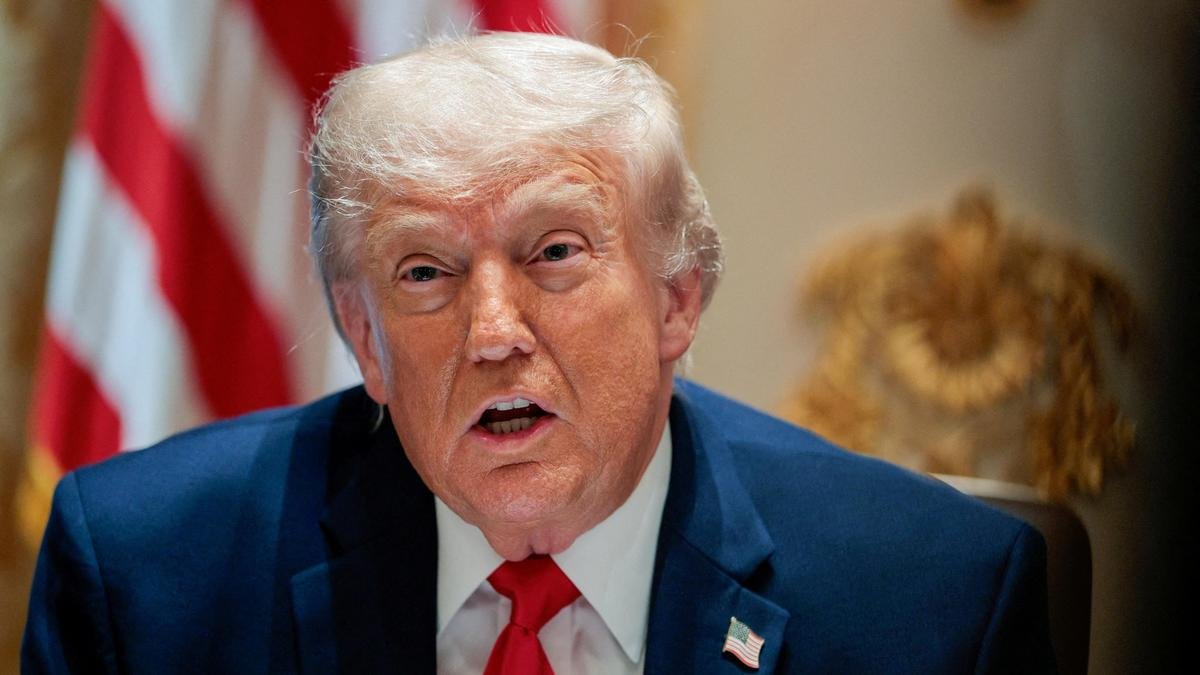
President Trump stated that he would hold a Situation Room meeting to make a final determination on the proposed Iran agreement.
According to reports, the framework under discussion includes conditions related to Iran’s nuclear program, maritime security, and the reopening of the Strait of Hormuz. Trump also emphasized that Iran must not develop nuclear weapons and that shipping routes must remain accessible.
The outcome of the meeting is expected to have a significant impact on investor sentiment and future market movements.
Strait of Hormuz Remains the Key Issue
The Strait of Hormuz continues to be the central focus of negotiations between the United States and Iran.
The narrow waterway is considered one of the most strategically important locations in global trade. Any restrictions on shipping through the strait can affect energy supplies worldwide.
Reports indicate that discussions include:
- Reopening commercial shipping routes.
- Ensuring safe passage for oil tankers.
- Removing maritime threats.
- Stabilizing regional trade operations.
Investors believe that successful implementation of these measures could help reduce uncertainty in global energy markets.
US-Iran Negotiations Drive Market Sentiment
The latest US-Iran negotiations have become one of the biggest factors influencing oil prices.
Market analysts say traders are reacting to every new update regarding the talks because the outcome could determine future supply conditions across the Middle East.
Recent reports suggest that negotiators have made progress toward a framework that could extend the current ceasefire and create conditions for continued diplomacy.
As a result, expectations of reduced conflict have placed downward pressure on crude oil prices.
Iran-Israel Conflict Continues to Influence Markets
Although optimism surrounding negotiations has increased, the Iran-Israel conflict remains an important source of uncertainty.
The conflict has already affected:
- Regional security.
- Global shipping operations.
- Energy exports.
- International trade flows.
Investors remain cautious because any escalation in military activity could quickly reverse recent declines in oil prices.
This explains why markets continue to react strongly to statements from political leaders and updates from diplomatic negotiations.
Global Investors Welcome Signs of Progress
Financial markets generally respond positively when geopolitical risks begin to decrease.
Investors believe that a successful Iran agreement could:
Improve Energy Security
Stable shipping routes would help protect global oil supplies.
Reduce Market Volatility
Lower geopolitical risks often result in more predictable market conditions.
Strengthen Economic Confidence
Businesses and investors typically prefer stable international environments.
Support Global Trade
Secure maritime routes are essential for international commerce.
These factors have contributed to the recent decline in oil prices as traders price in the possibility of improved stability.
What Analysts Are Saying
Energy experts remain cautiously optimistic about the situation.
While the market has welcomed signs of diplomatic progress, analysts warn that several important issues remain unresolved.
Among the key concerns are:
- Verification of any future agreement.
- Long-term security guarantees.
- Compliance with nuclear restrictions.
- Regional political tensions.
Because of these uncertainties, many experts believe oil prices could remain volatile in the coming weeks.
The Apna Times Analysis
At The Apna Times, we believe the latest decline in oil prices highlights how strongly global markets are reacting to developments in the Trump Iran deal negotiations.
The possibility of reopening the Strait of Hormuz and reducing Middle East tensions has encouraged optimism among investors. However, the final outcome still depends on whether both sides can reach a mutually acceptable agreement.
Trump’s upcoming decision could become a major turning point not only for US-Iran relations but also for global energy markets and international trade.
Conclusion
Oil prices fell after President Donald Trump announced that he would make a final determination on the proposed Iran deal, increasing hopes that diplomatic efforts could reduce tensions and improve stability across the Middle East.
The future of the Strait of Hormuz, ongoing US-Iran negotiations, and the broader Iran-Israel conflict remain critical factors shaping global market sentiment. While investors have welcomed recent signs of progress, uncertainty continues to linger as world leaders work toward a potential agreement.
For the latest updates on Oil Prices Today, Trump Iran Deal, US Iran Negotiations, Strait of Hormuz News, and Middle East Tensions, stay connected with The Apna Times.